Search Website
Customs, Folklore and Social Value
In the late 19th and early 20th century the moral universe of rural China was formed by a highly syncretic mix of Buddhism, Confucianism, Daoism and popular religion, not to mention the wisdom passed down through ages in the form of folklore and social customs. Behind this complex of values and ideas was the imperial state that attempted, with mixed success, to impose order on society by mandating orthodox ideals, such as the glory of the emperor and the ideal class structure of 'Scholar, Farmer, Artisan, Merchant' - in that order of importance.
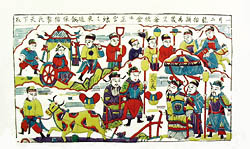
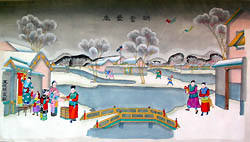
Looking at nianhua one can discern the presence of any and all of these moral codes, and witness their appearance in numerous combinations and configurations. This may serve to remind us that however much China has been influenced by major philosophies like Buddhism and Confucianism, those ideas are always at the mercy of local interpretation.
|
|
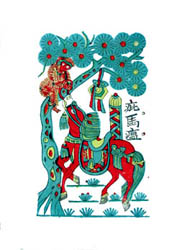
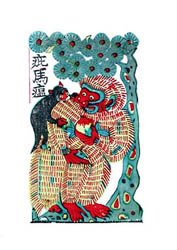
'Bimawen' (II) |
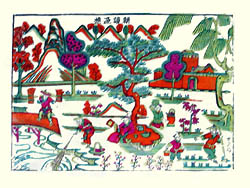
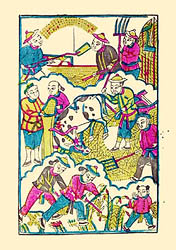
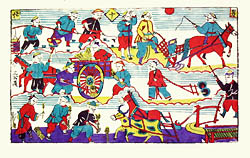
'Ploughing, Studying, Fishing and Collecting Firewood' |
|
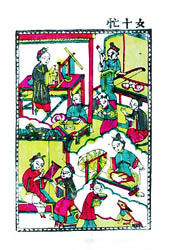
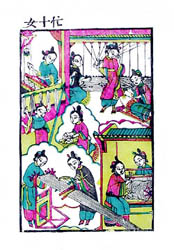
'The Labours of Women' (I) |
'The Labours of Women' (II) |
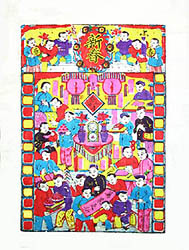
'New Spring' |
|
|
|
|
|
|
'Honouring Forbearers' |
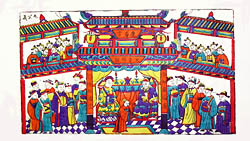
'New Year Rituals' |
|
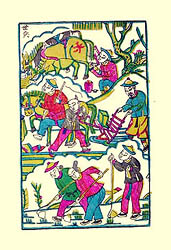
'Second Day of Second Month' |
|
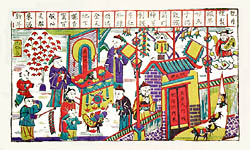
'New Year's Day' |