

Search Website
Ley & Lois Smith War, Memory and Popular Culture Research Collection
The Role of Sports in War Time
- Display created by Kristen Jeanveau, PhD candidate
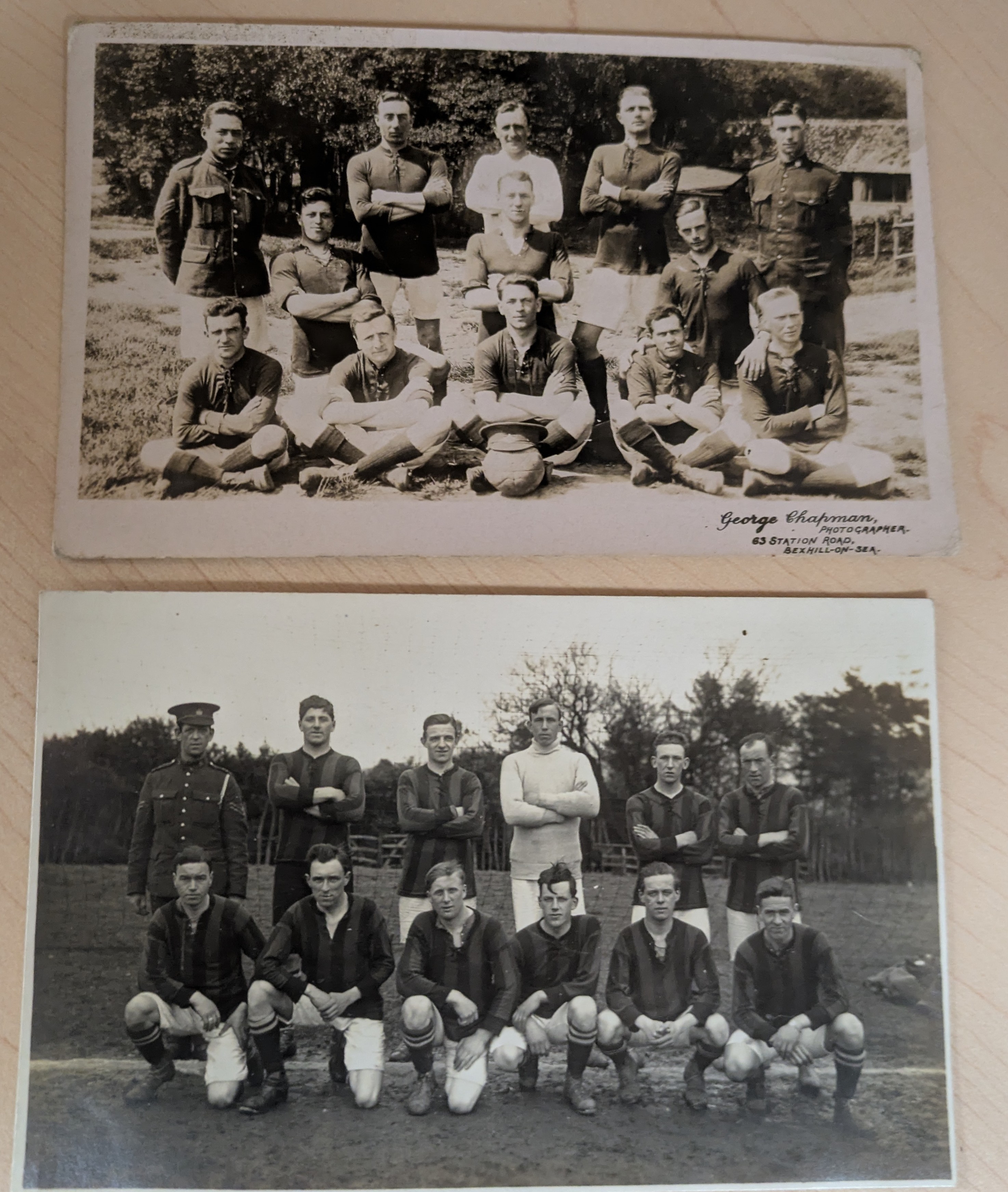
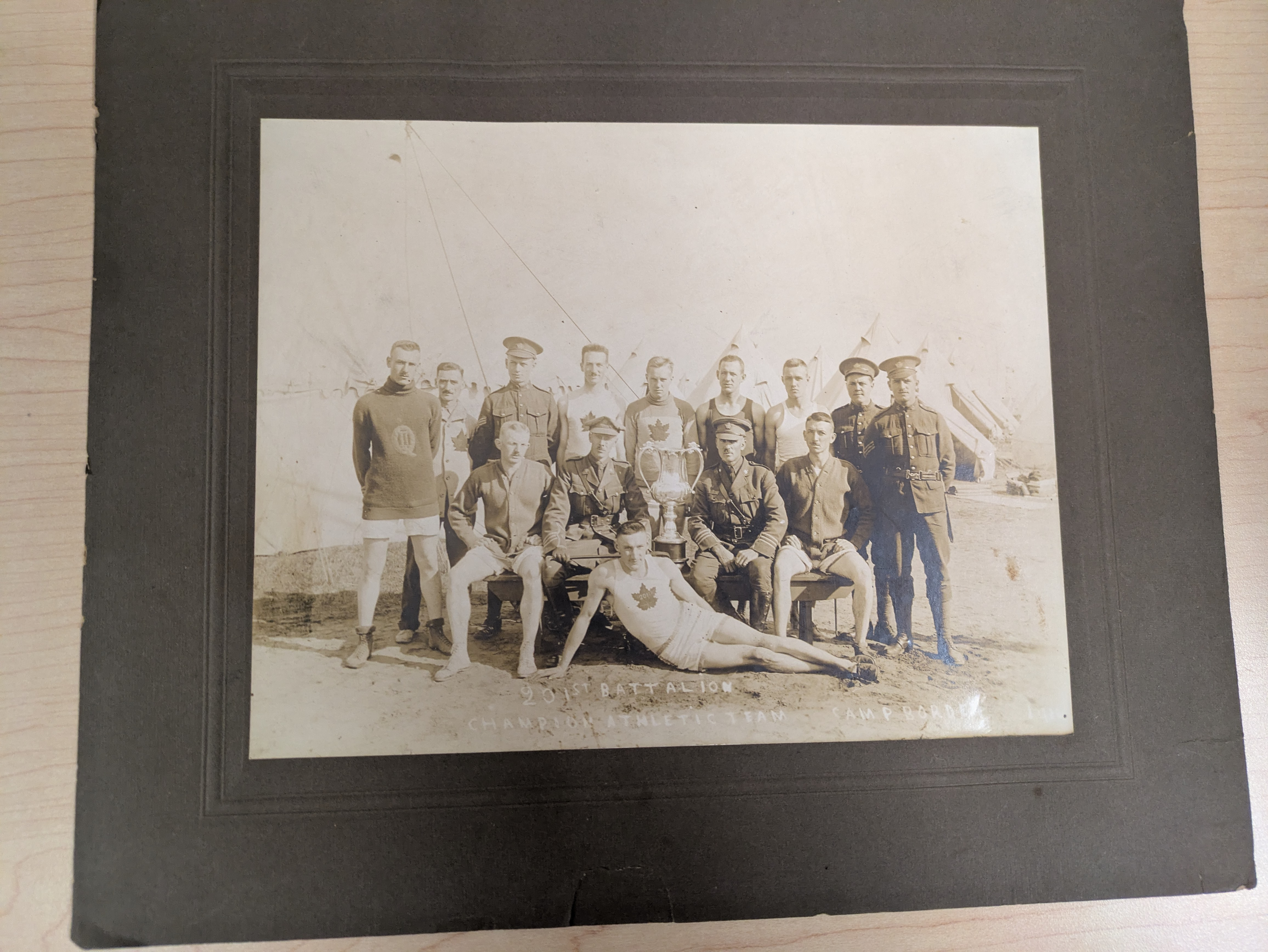
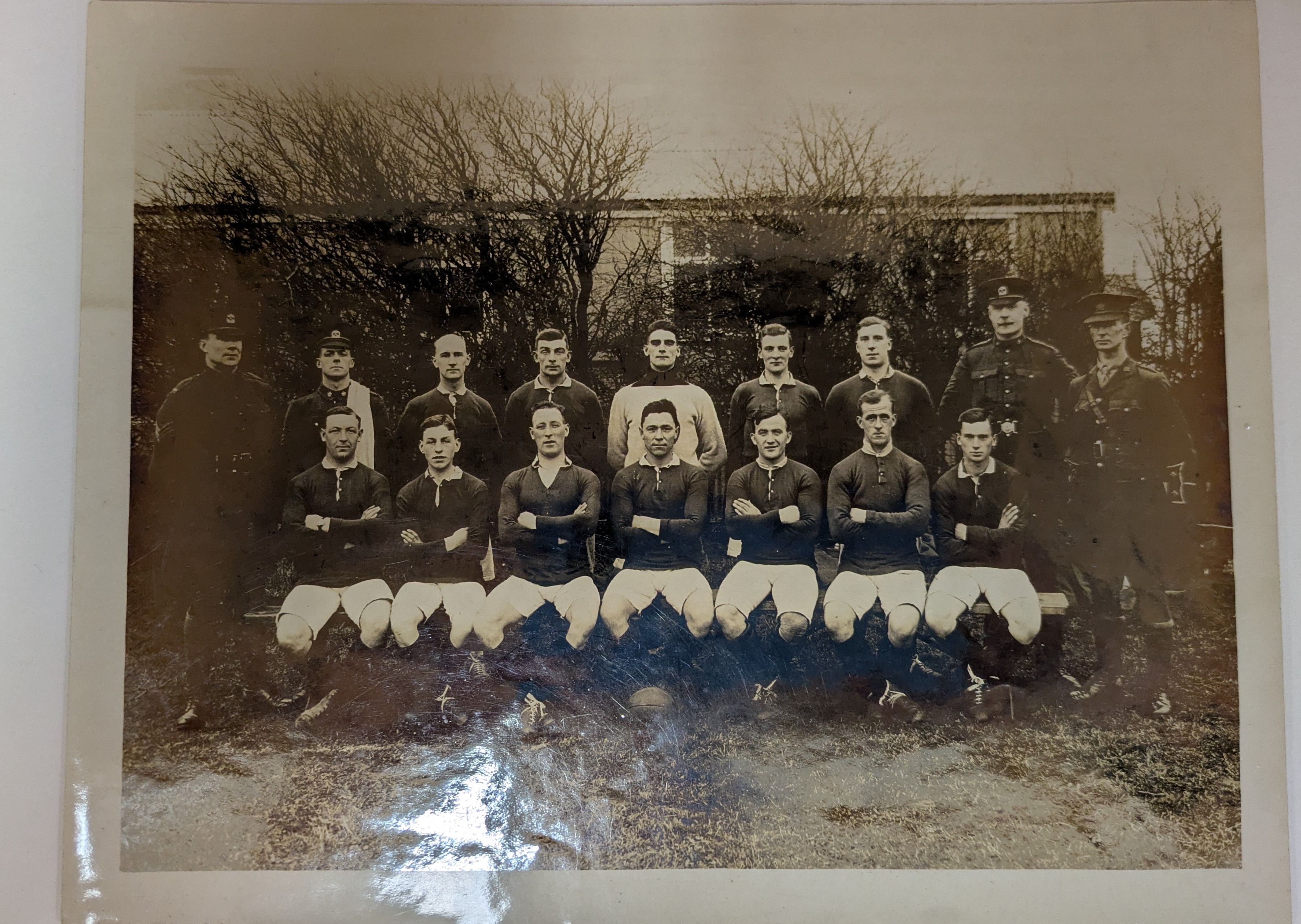
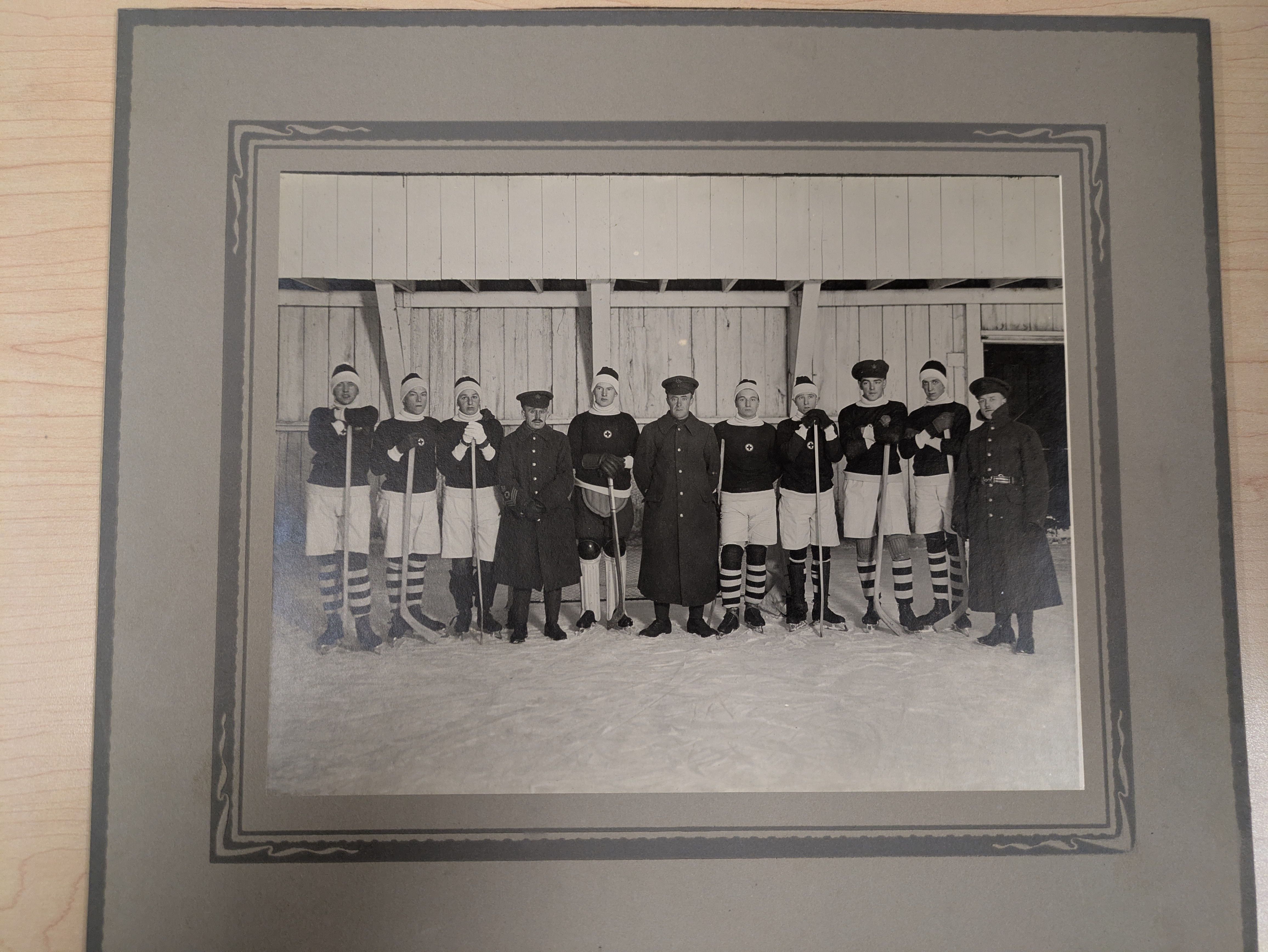
The beginning of the twentieth century was marked by a ‘crisis of masculinity’ – the transition to urban living had supposedly softened men who previously would have made a living in rural environments via hard labour. Team-based sports such as rugby and football in Britain, hockey and lacrosse in Canada, and cricket in Australia were seen as a possible antidote to this woe. Sport presented an opportunity to create rugged men who would be well equipped to defend the British Empire, should the need arise.
The language of sports permeated war time propaganda in the First World War. The concept of ‘sportsmanship’ in the context of the British Empire emphasized the traits of a proper gentleman: someone who displayed courage and daring, modesty in victory, graciousness in defeat, competed in a team and adhered to agreed-upon rules in gaming, and thus, in war. While sports were used to bolster positive nationalist ideals among the Allied countries, atrocity stories gained prevalence as examples of the perceived ‘unsporting’ behaviour of German soldiers. On a basic level, the influence of sport fostered a relationship of ‘us versus them’ and encouraged dehumanization of the enemy.
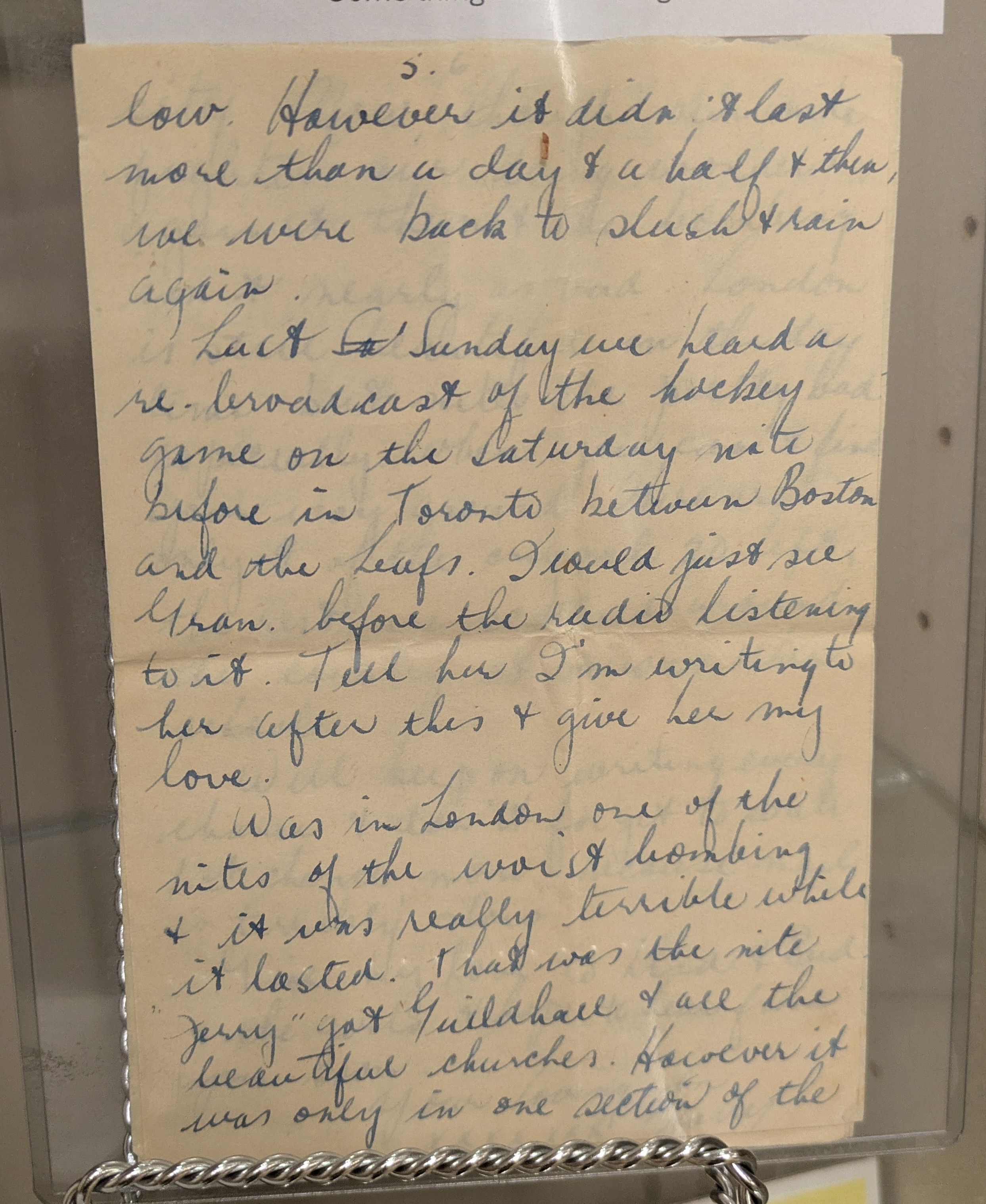 |
LETTER FROM H.G. DICKSON JR. Even abroad, Canadians in the Second World War were determined to follow the progress of their favourite teams back at home. This letter from Harry G. Dickson Jr, a nineteen-year-old from London, ON who was a Wireless Air Gunner in the RCAF recounts a night where his squadron tuned into the radio rebroadcast of a Toronto Maple Leafs hockey game versus the Boston Bruins. Alas, the Leafs lost 0-1 to Boston. Some things never change! |
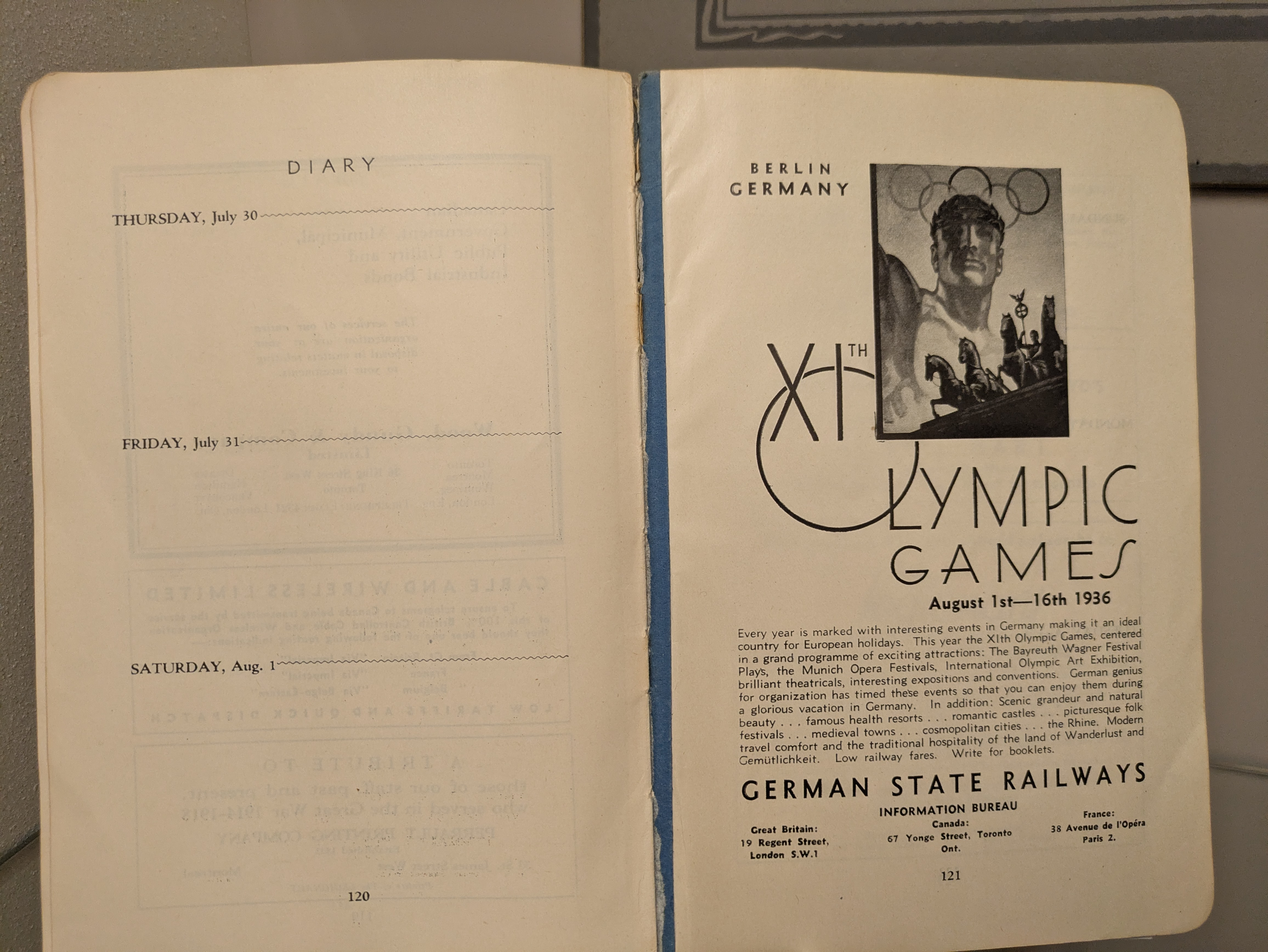 |
AD FOR 1936 BERLIN OLYMPICS The 1936 Berlin Olympic Games were a complex arena of racial politics. While chosen as the host city well in advance of the Nazis coming to power in 1933, there was fervent tension in the sporting community that the Games would do little to reconcile an increasingly hostile Germany to the rest of Europe. A lavish advertising campaign attempted to gloss over these tensions – often resulting in unusual juxtapositions such as this particular ad from the official 1936 Vimy Ridge war memorial unveiling. Thousands of Canadian veterans undertook a pilgrimage to France for the summer to revisit sites of the First World War and found themselves entreated to visit Germany afterwards to witness the spectacle of the games. |
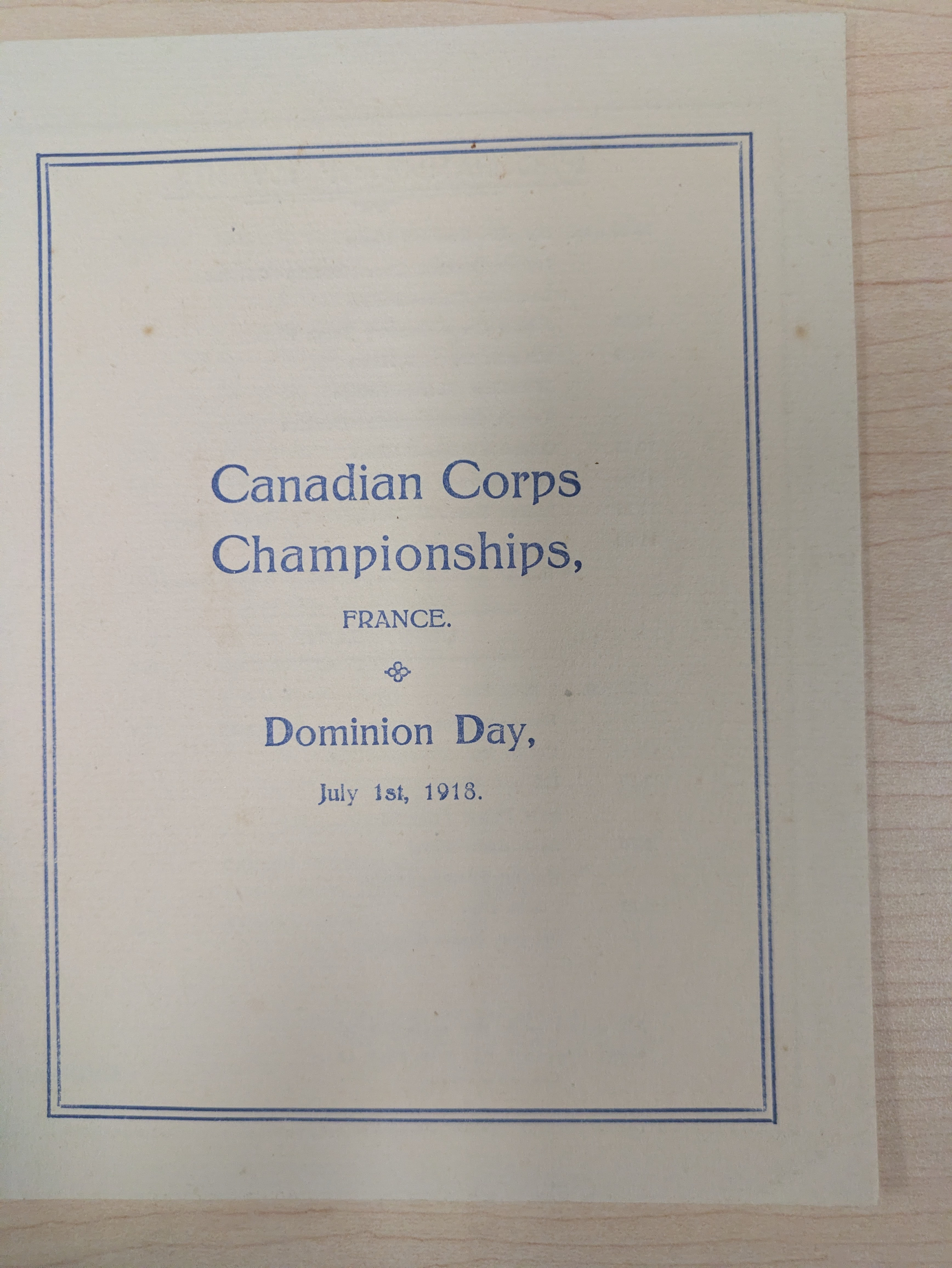 |
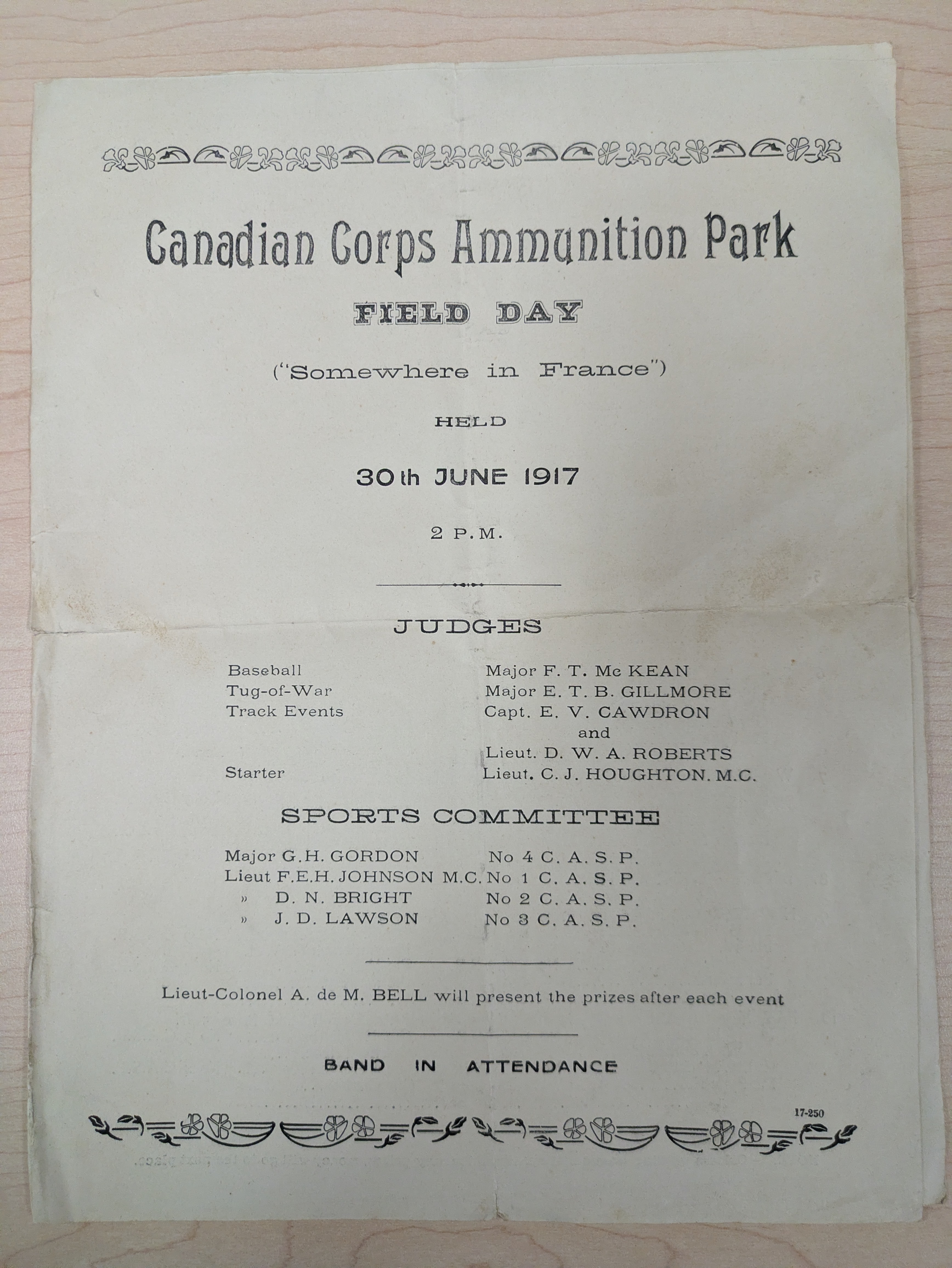
CHAMPIONSHIP PROGRAM Tournaments organized for the CEF during the First World War fostered friendly (but determined) competition. This program for the Canadian Corps Championships in France on 1 July 1918 reprinted the current Canadian amateur records for the applicable events. Indigenous veteran Tom Longboat is noted on the back as the current record holder for the 15-mile run, set on 4 October 1908 at the London Olympics. Longboat enlisted in 1916 to serve as a dispatch runner with the 107th Pioneer Battalion and would later be inducted into the Canadian Sports Hall of Fame in 1955. |
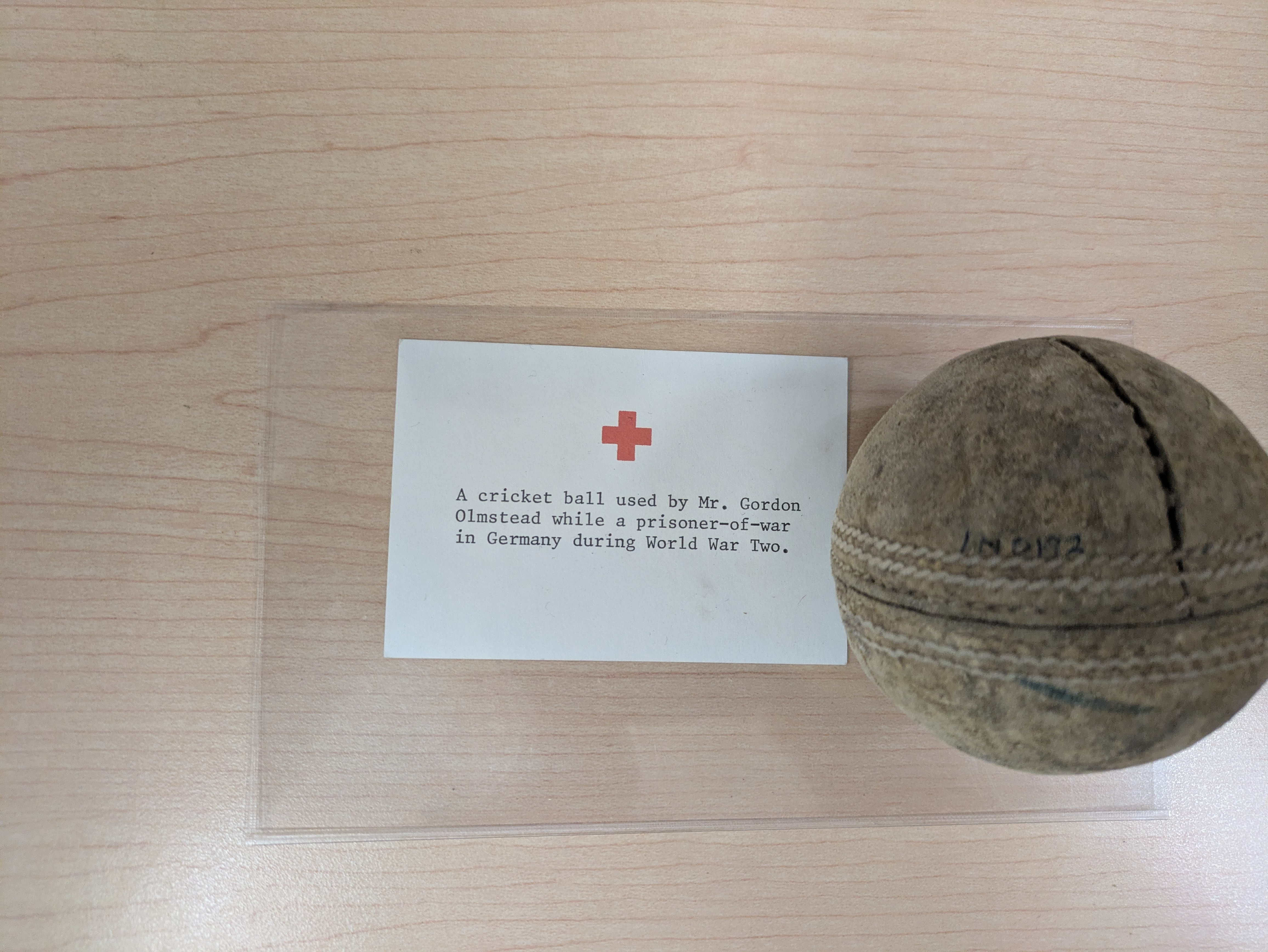 |
CRICKET BALL A Cricket ball used by Mr. Gordon Olmstead while a prisoner-of-war in Germany during World War Two. |
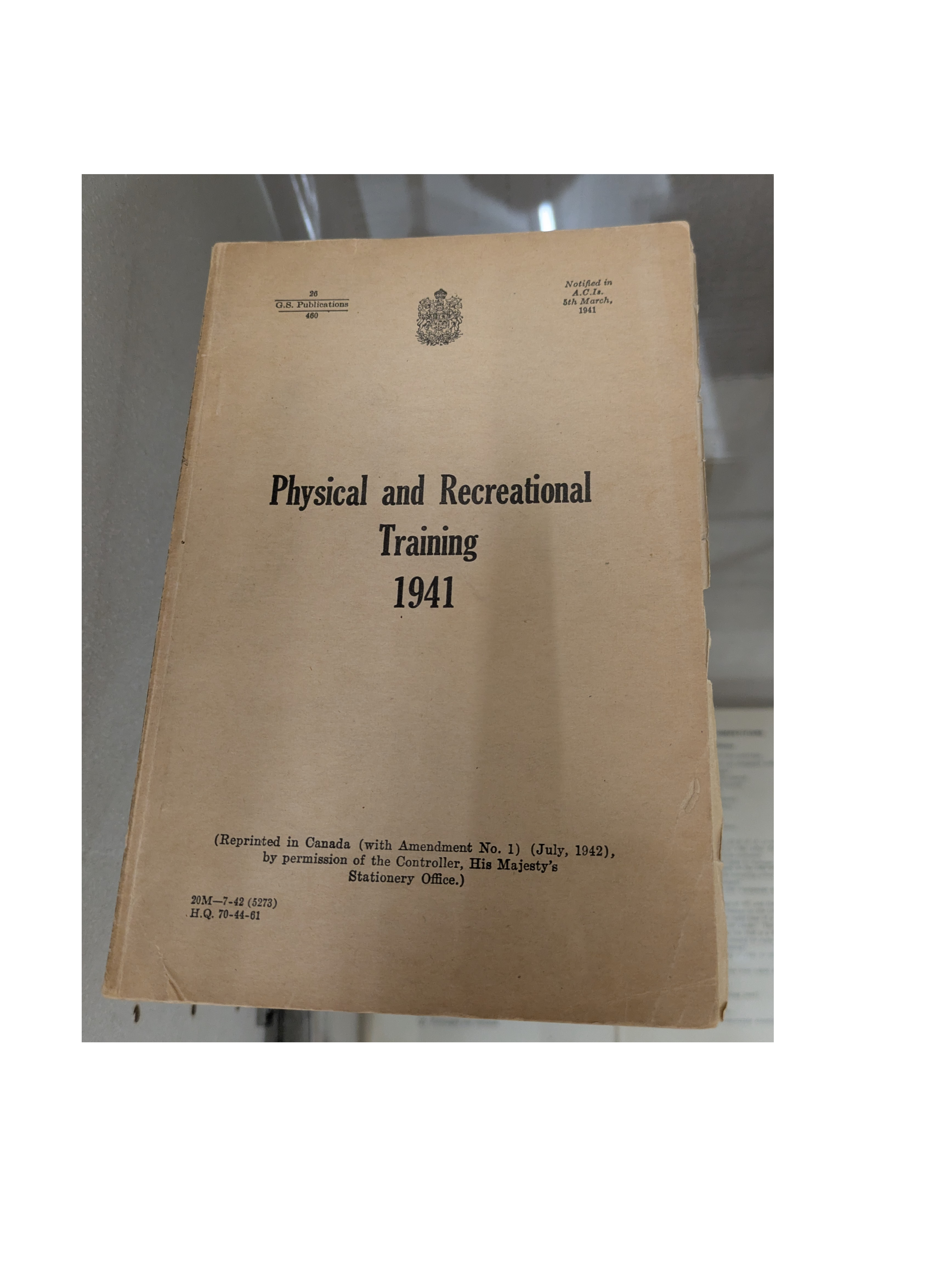 |
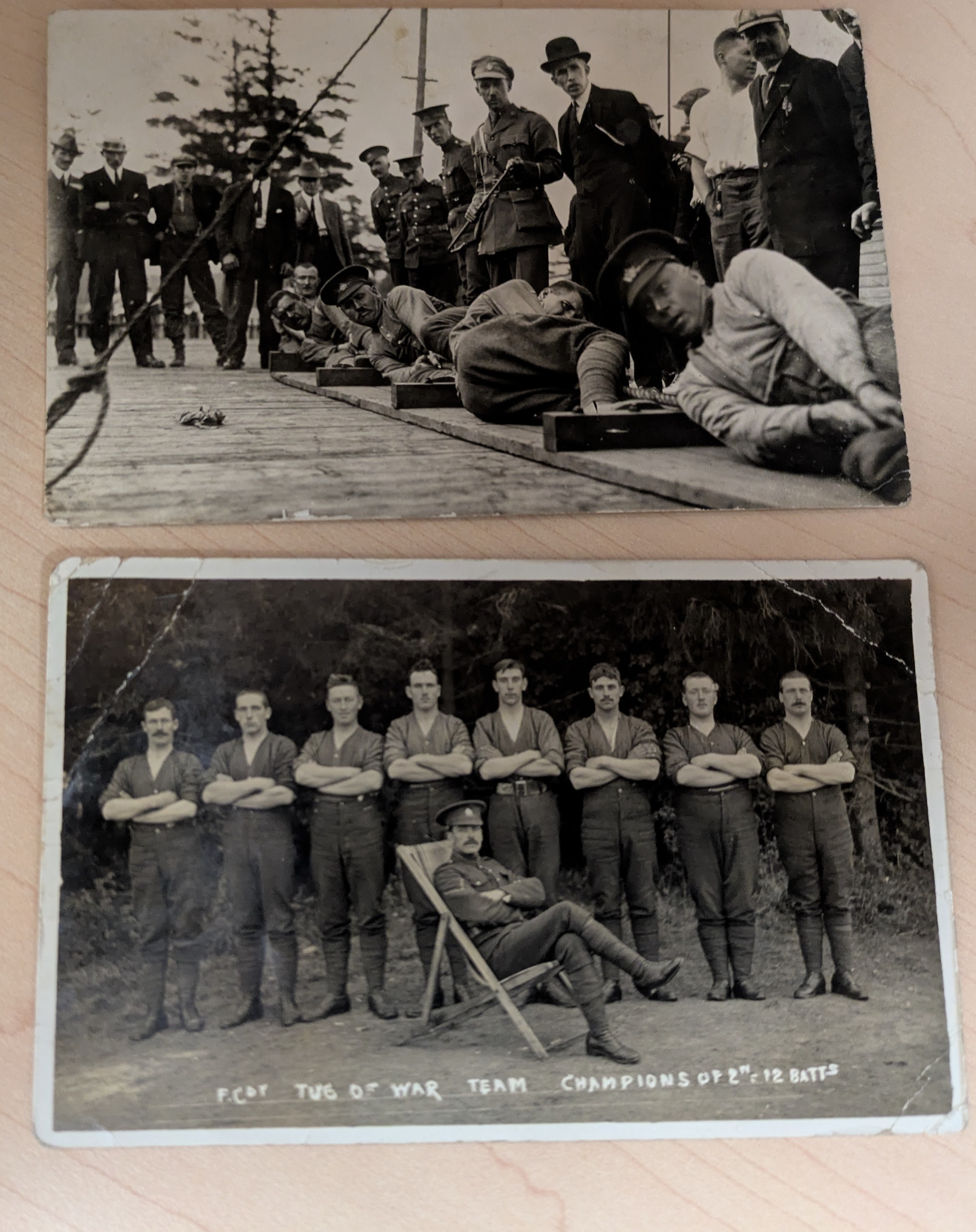
TRAINING MANUAL This pamphlet created in 1941 for the Canadian Corps reflects a more scientific and intuitive approach to physical training that combined game and endurance sporting activities such as boxing, tug-of-war, cross-country running, basketball, and swimming alongside the mandatory physical training requirements for enlisted men. It notes: “the men under instruction must be treated as intelligent beings. They can be easily interested if they are told the reasons and benefits of the exercises.” |
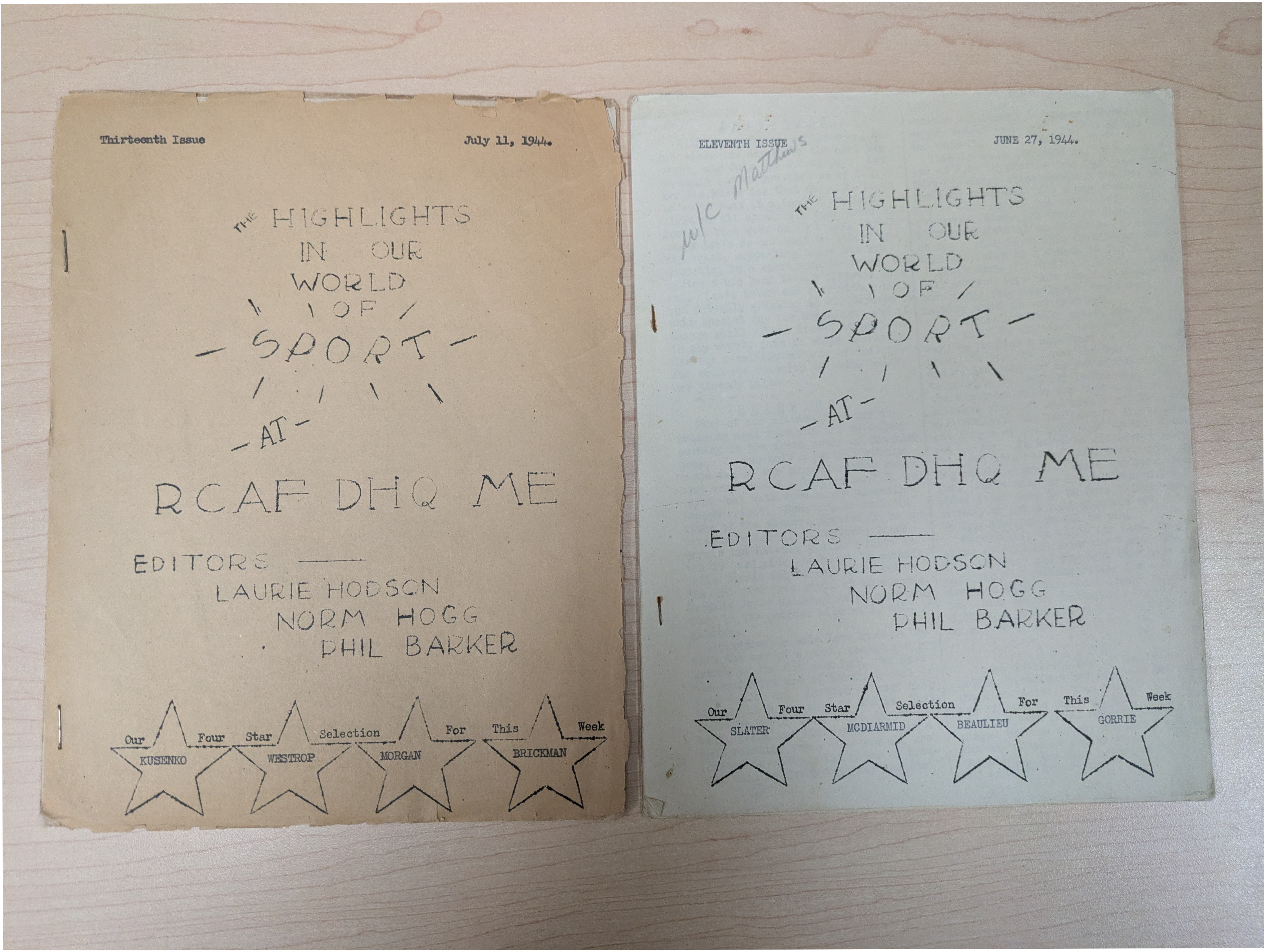 |
WORLD OF SPORT NEWSPAPER Sport could also serve as a distraction and opportunity to develop camaraderie while still fostering competition. The RCAF maintained a district headquarters in Cairo, Egypt during the Second World War which played host to a four-team baseball league. Detailed statistics were reprinted in unofficial newspapers such as The Highlights in our World of Sport, which boasted a circulation of 500 copies for its thirteenth issue. This issue recounts a rivalry between RCAF members from the Eastern vs Western provinces in a swim-meet relay, and the loss of the RCAF All-Star softball team to their American counterparts. |
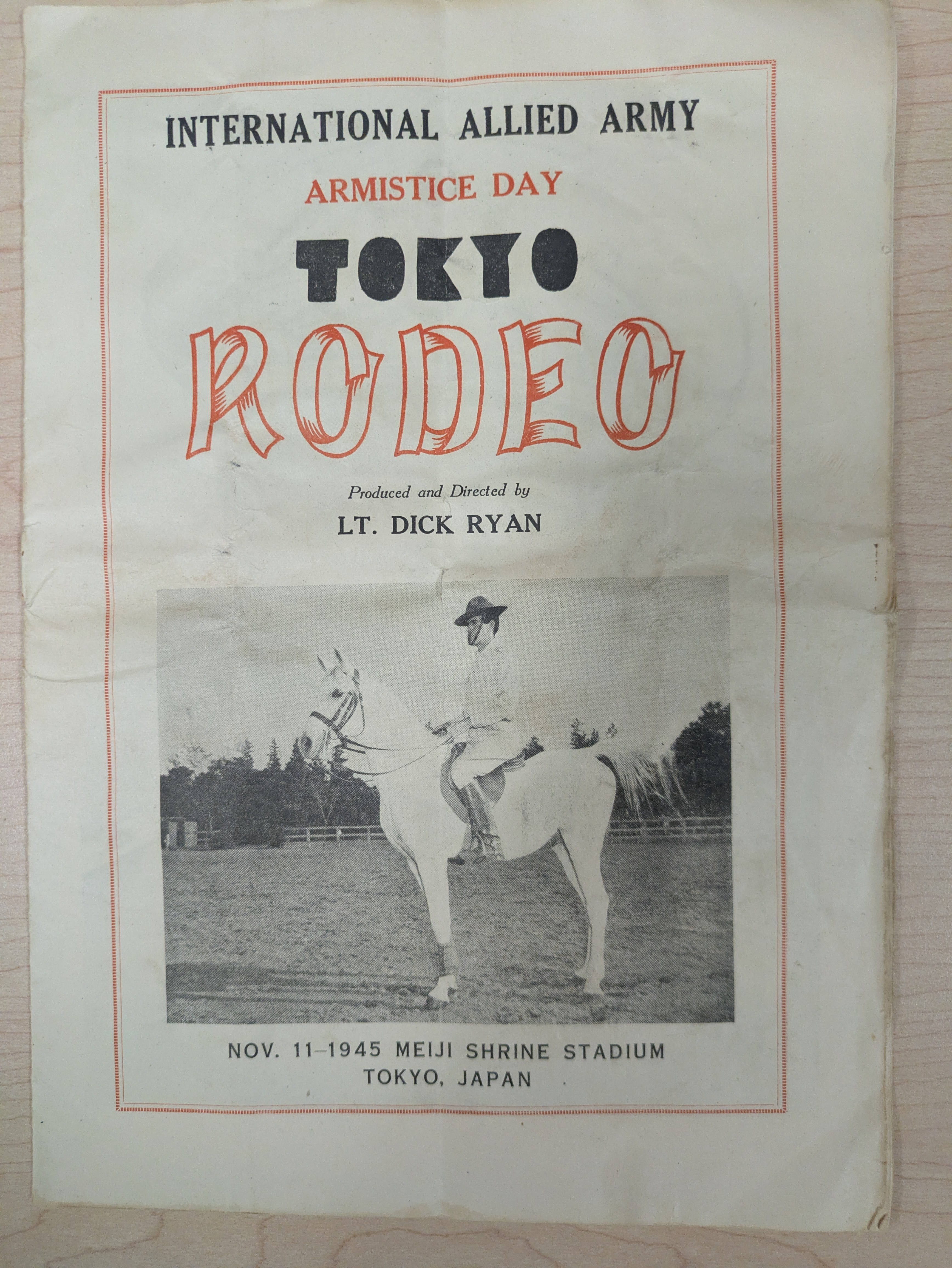 |
RODEO PROGRAM Sport could be used to assert nationalist dominance. In the aftermath of the atomic bomb attacks on Hiroshima and Nagasaki, the American forces arranged a “Tokyo Rodeo” for the amusement of the “International Allied Army.” The imagery used in the rodeo program relies on tropes of the “Wild West of the American Frontier” to depict the triumph of western exceptionalism over fascism. Heralding that Lt. Dick Ryan and William C. Chase were the first Americans to ride the personal mounts of Emperor Hirohito and General Hideki Tojo denigrated the masculinity of their opponents. |
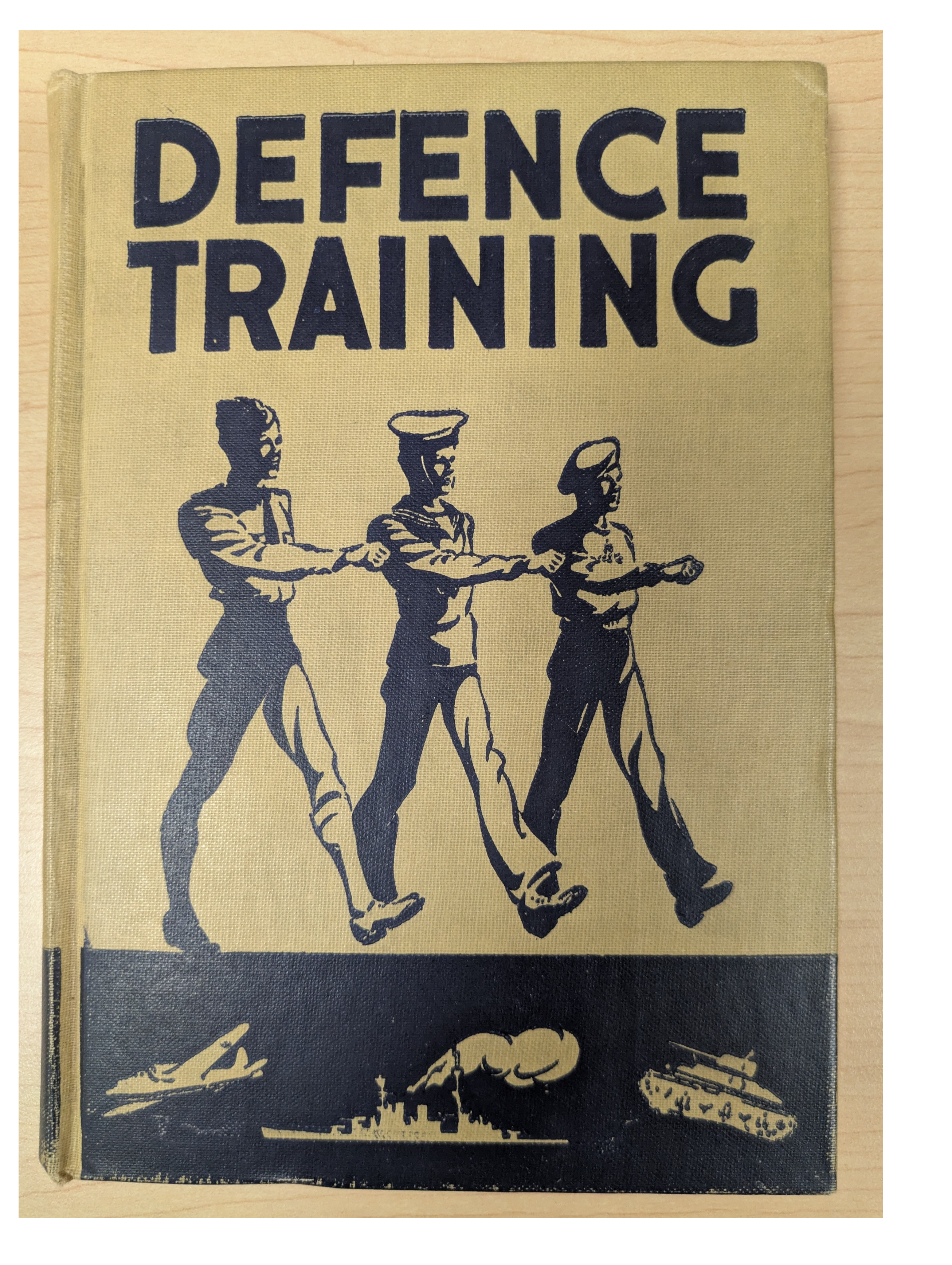 |
DEFENCE TRAINING BOOK What subjects would you expect to see in a typical High School curriculum? Mathematics? Phys-Ed? English? …. Rifle training? In the Second World War, sport and leisure became vehicles to train young Canadians for war service and emphasized civil defence preparedness. This 1942 textbook was designed for students in grade ten through twelve in Ontario and included small arms (rifle) training, aircraft recognition, map reading, gas detection, and first aid. This was a far cry from children in the First World War playing ‘Over the Top’ games cut out of magazines or dressing up in costumes to perform patriotic flag drills. |
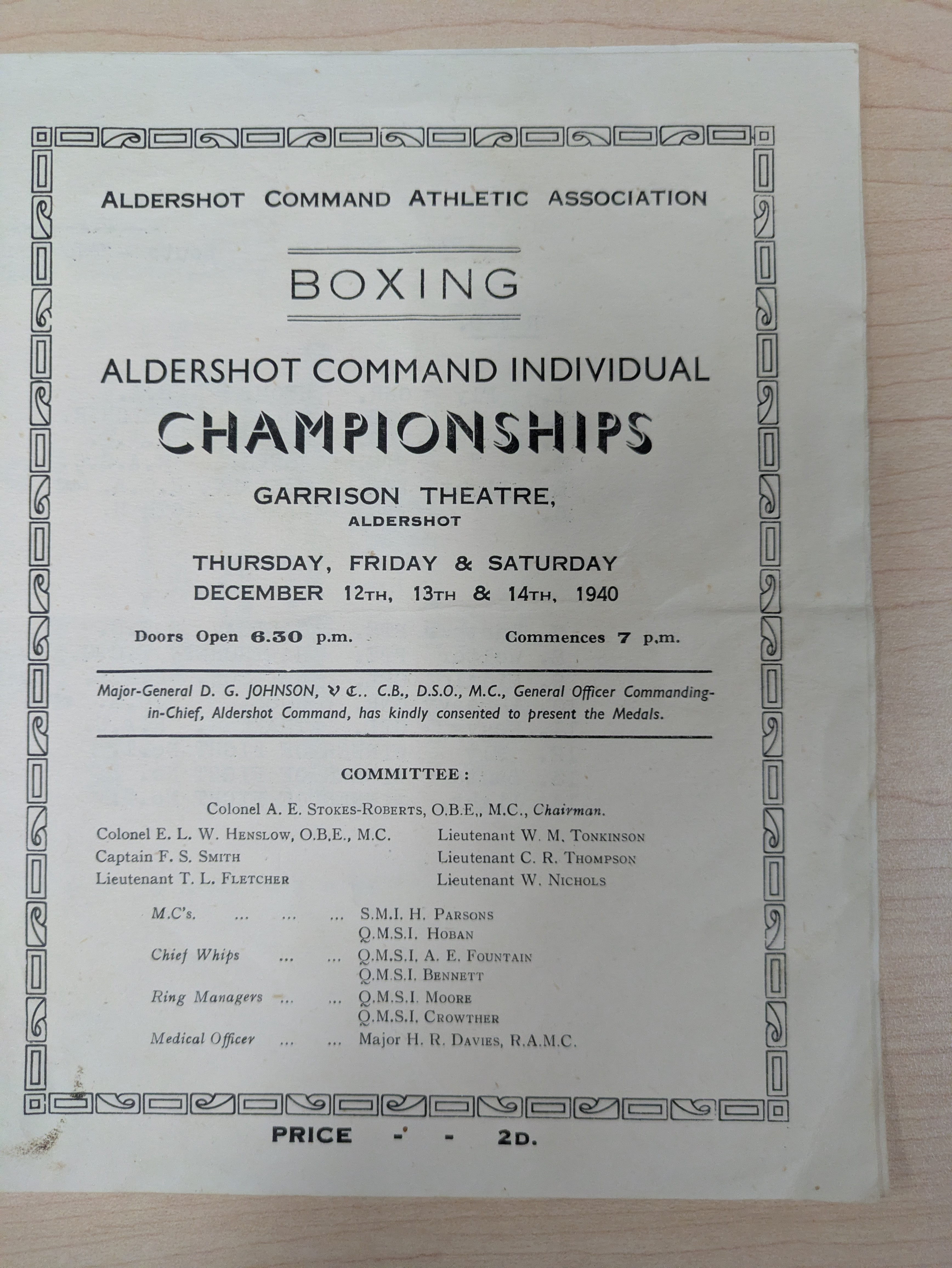 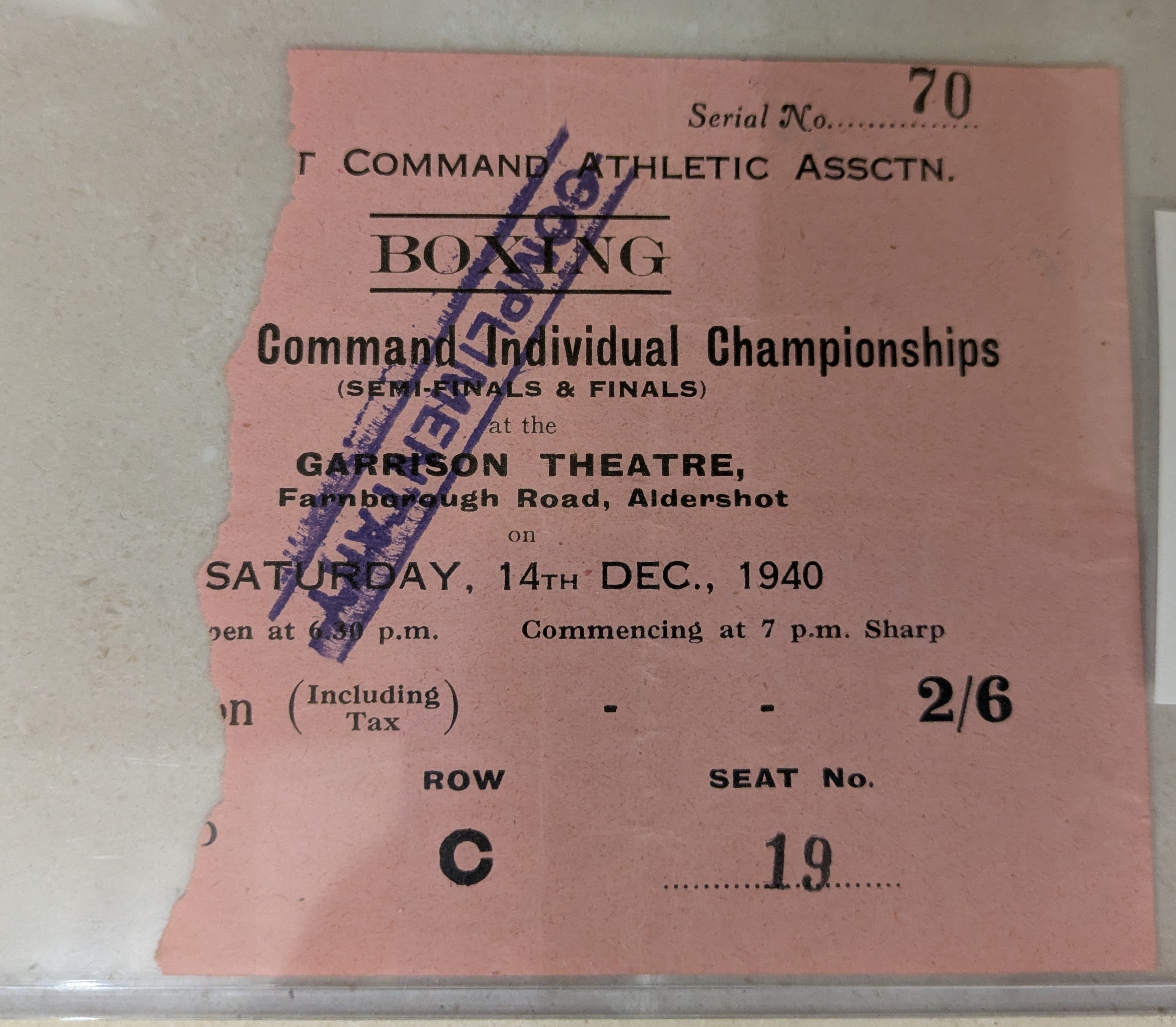 |
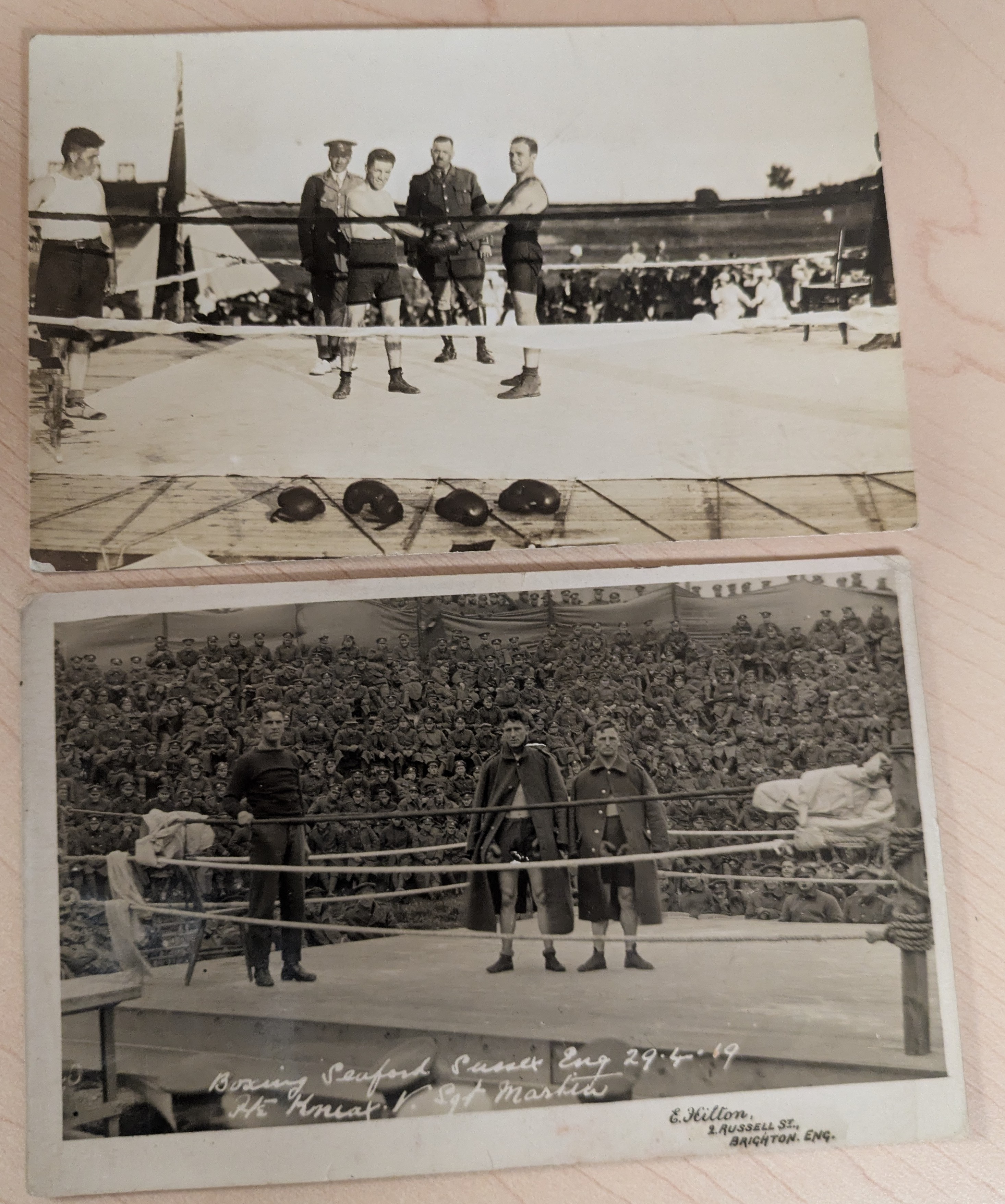
BOXING Boxing was a popular recreational activity and served as practical training for unarmed combat. Annual tournaments were a hot-ticket item – but surly enlistees expecting to see their CO get their comeuppance from a fellow Private would be disappointed as matches were strictly arranged to avoid a clash between regular recruits, NCOs, and Commissioned Officers. |
Additional Items
 |
 |
 |
 |
 |
 |
 |